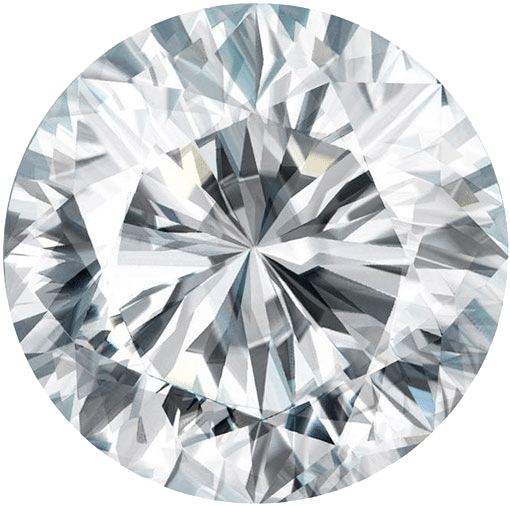
In 1919, at the age of 21, Marcel was a studying for a PhD in mathematics at the University of london. His doctoral thesis was entitled “Diamond Design: A Study of the Reflection and Refraction of Light in Diamond,” and it changed the diamond industry forever. In it, he proposed a set of optimal proportions for a 58-facet round cut (57 if there is no culet), which he suggested would minimize the amount of light escaping out the sides or bottom of the diamond, and maximize the light emerging through the top, or table, from where it originally had entered.
Tolkowsky proposed that a round brilliant cut diamond should be cut to the following specifications:
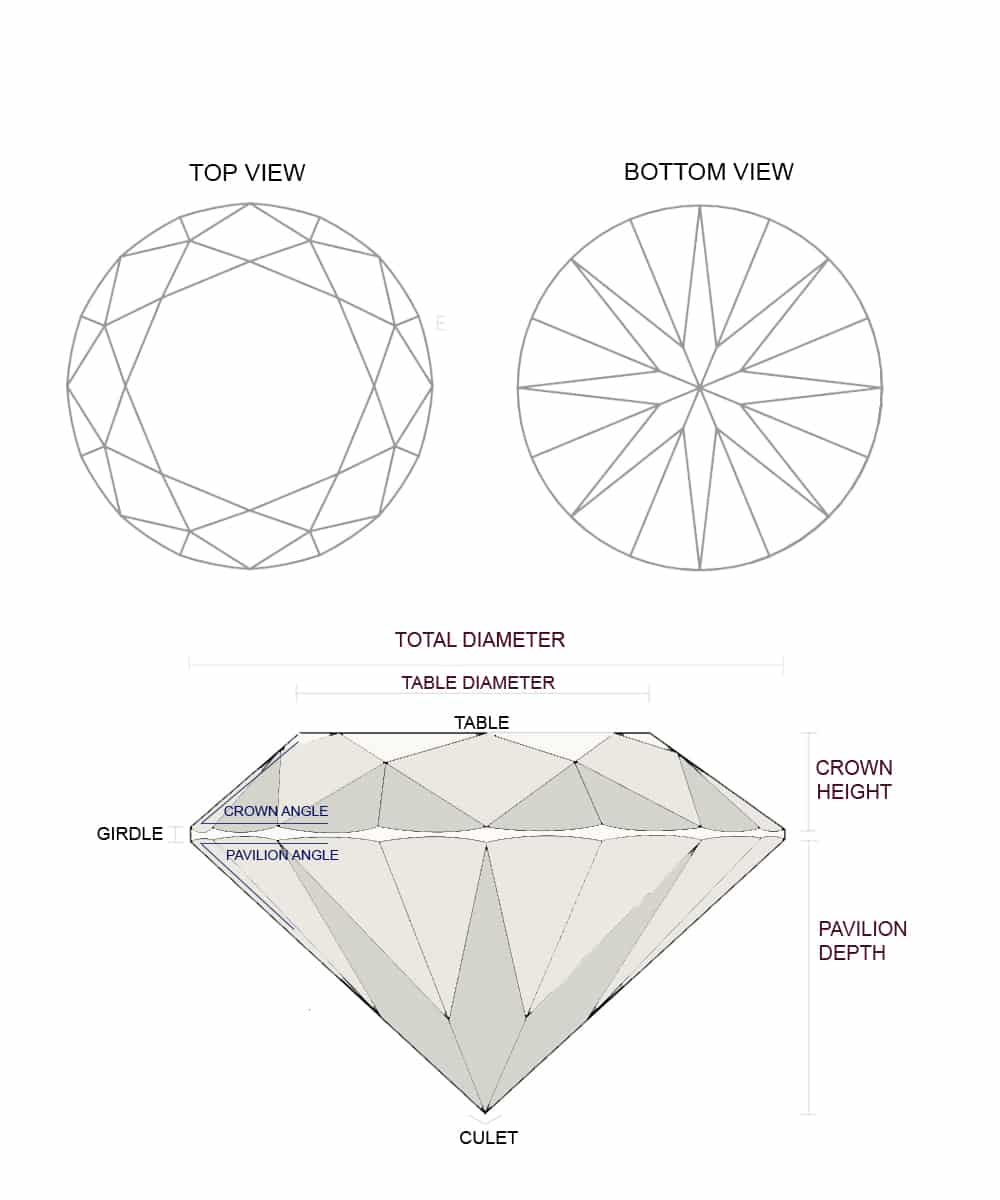
The Crown Angle, which is the diagonal from the edge of the table facet to the girdle, should be 34.5°.
The Pavilion Angle, which is the diagonal from the edge of the girdle to the culet, should be of 40.75°.
The Table Diameter, which is the diameter of the table facet divided by the total diameter of the stone, should be 53%.
The Total Depth of the diamond, which is the depth of the stone from table to culet, divided by the width of the diamond, should be 59.3%.
The Crown Depth, which is the depth of the upper section of stone (crown height), from table to girdle, divided by width, should be 16.2%.
The Pavilion Depth, which is the depth of lower section of stone (pavilion depth), from girdle to culet, divided by width, should be 43.1%.