

Focus on
THE DIAMOND MARKETS
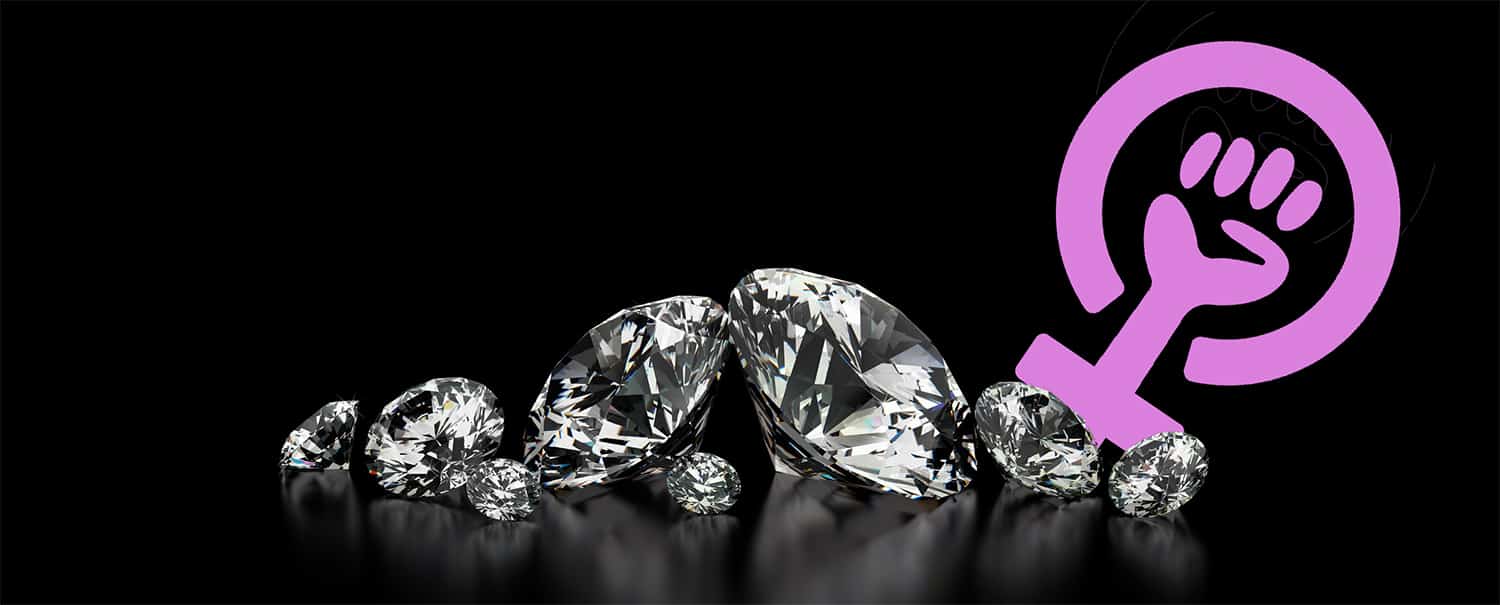
WOMEN ARE DIAMONDS’ NEW FRONTIER,
NOW AS SELF-PURCHASERS
Headlined “The miracle of love,” the copy in a popular De Beers print ad from the 1960s, read: “Her engagement diamond, fair spark of eternity, reflects the light of her happiness in changeless splendor, and treasurers its tender message of love until the end of time.”
What was obvious was that, while the subject of the ad copy was clearly a woman, the target of the campaign most certainly was not. The woman would be the recipient of the diamond, but the buyer would be a man.
With a few notable exceptions, it was an approach that was a hallmark of diamond marketing for the better of 70 years. In the 1980s, De Beers launched its “two months’ salary” campaign, as a benchmark for potential diamond buyers to estimate the amount of money they were willing to spend on their relationship. There was no doubt as to whose salary was involved.
But today, with millennials becoming dominant, the women who were mainly viewed as primary recipients of gifted diamond jewelry are being recognized as possibly the industry’s most promising target market. That certainly was the attitude of a study by De Beers in 2017 into the growing strength of the self-empowered women’s market.
THREE FACTORS DRIVING EMPOWERMENT OF WOMEN
The De Beers report saw three fundamental factors driving the empowerment of women as independent consumers in the diamond market. First, it says, relationship dynamics are being transformed, with partnerships now being “more about the growth of the two equal individuals, as much as they are about the growth of the partnership itself.”
Second, the report says, women have considerably more spending power than they did before, leading to a significantly greater degree of self-purchasing. And third, the way women perceive themselves is evolving, with the constant across cultures being that that womanhood is becoming more closely associated with “a sense of strength and empowerment.”
These elements do not necessarily undermine the traditional anchor of the diamond market, which is jewelry associated with engagements, weddings and wedding anniversaries, the De Beers report states. But is does reinforce the understanding that other occasions need to be associated with diamond purchases.
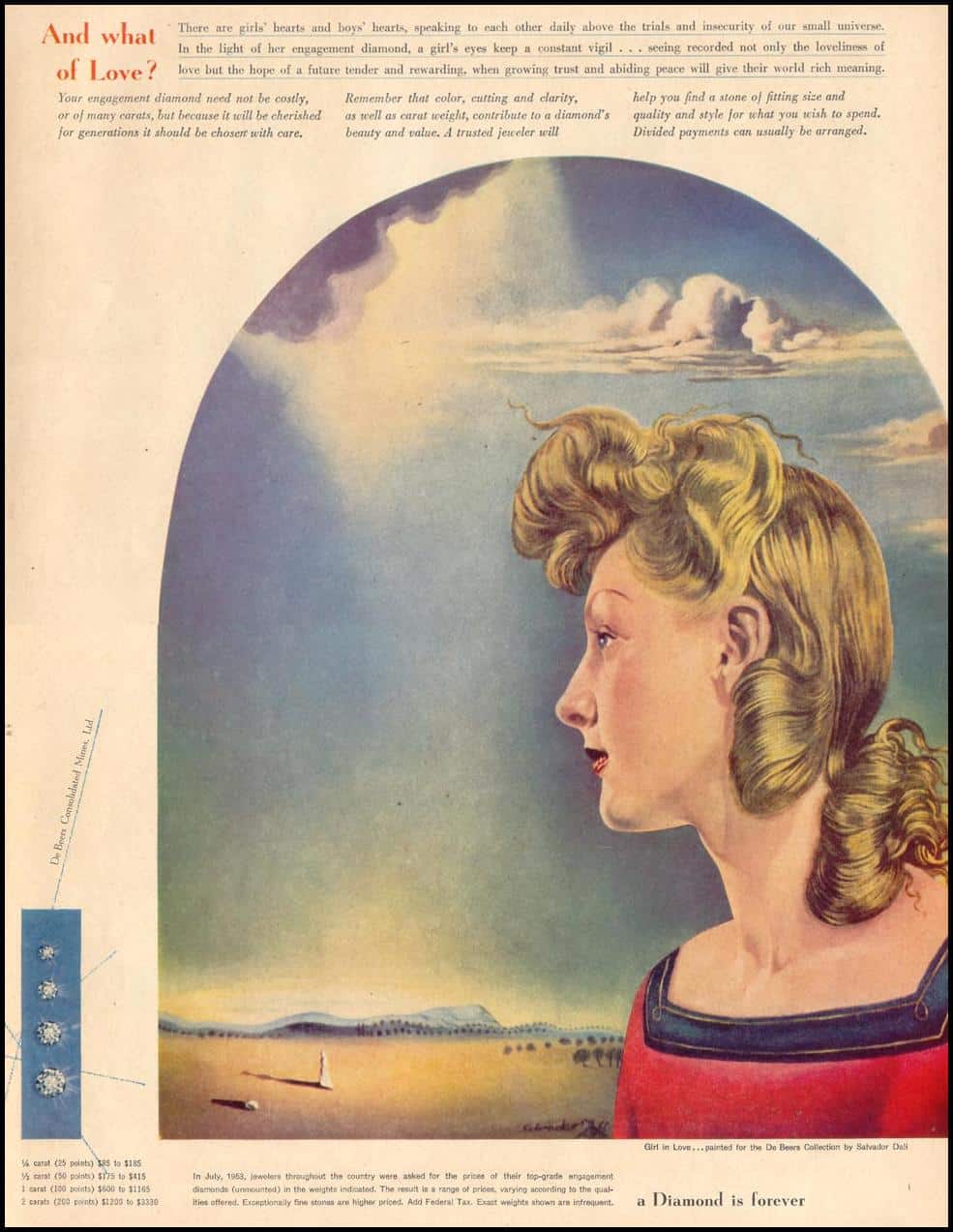
A De Beers’ ad from the 1950s, which featured women but clearly was targeted at men as potential buyers.
SOCIAL EMPOWERMENT AFFECTS DIAMOND-BUYING PATTERNS
According to the De Beers report, the growing social empowerment of women coupled with their rising financial capacity is impacting buying patterns in the diamond market. In 2016, it stated, some 31 percent of all women’s diamond jewelry in the United States was bought by women, with self-purchasing of non-bridal diamond jewelry in the country growing by more than a third between 2005 and 2015, reaching a rate of 33 percent.
And even when they are not buying for themselves, the influence that the woman has directly on the purchasing decision is critical, the De Beers report stated. In the United States, women have influenced 42 percent of the pieces bought by others, and the figures are still higher in China and Japan.
Interestingly, the country with a particularly unique purchasing profile is India, where there never really has developed an affinity for the Western diamond engagement ring. In the country that many expect will hold the title of the world’s third and possibly second largest diamond market, 41 percent of diamond jewelry is today purchased by women themselves, and a further 42 percent are chosen by women, even if they are actually paid for by men.
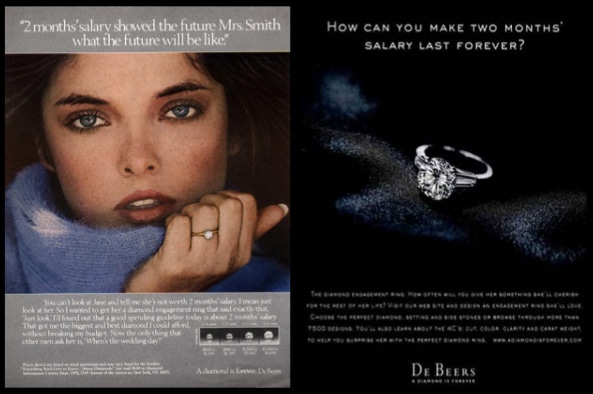
De Beers’ two month’s salary campaign, suggesting the appropriate amount to spend on a diamond engagement ring, clearly referred to the man’s salary.
STRATEGIES REQUIRED FOR EMPOWERED WOMEN’S MARKET
The De Beers report concluded by considering the significance of the changing character of female consumers for companies marketing diamonds. “For decades, diamonds have been marketed almost exclusively as gifts of love and symbols of marriage,” it stated. “While this universal and powerful motivation will remain the bedrock of the industry, new opportunities are clearly emerging as the position of women in society and the economy evolves.”
Female self-purchasers are becoming a prime target for diamond marketers, knowledgeable that they are likely married, over the age of 35 and have medium to high levels of income. Approaches will need to differ from country to country, the report said, but jewelry retailers who are able to elicit impulse buying through design, price or emotionally-driven sales pitches are likely to enjoy success.
Second, stated the report, jewelry retailers will have a wider selection of “life “moments,” for women to celebrate with diamond purchases. These could include unexpected windfalls, new jobs, promotions and bonuses, and simply buying on impulse because they have the cash to do so.
Third, whereas diamonds traditionally have been associated with love and commitment, the changing consumer profile means that it can come to symbolize a broader spectrum of emotions, such as optimism and pride.
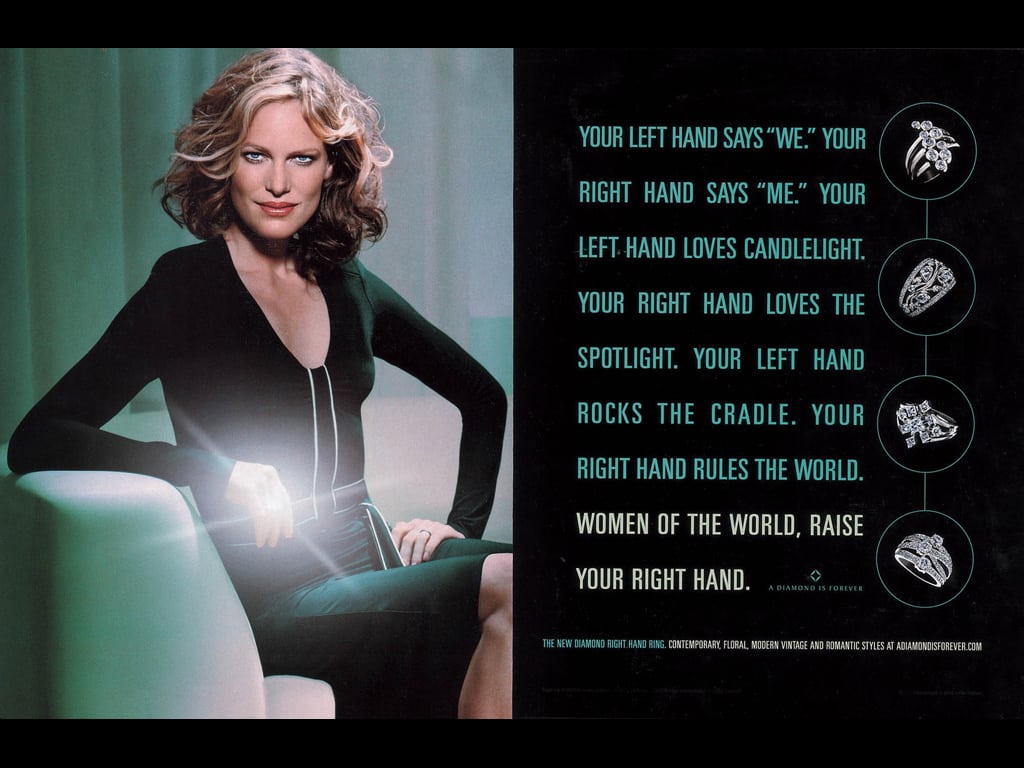
De Beers’ right-hand campaign in the 1990s, which stated that a ring worn on the right hand is indicative of an independent woman, suggested a shift in marketing tactics.